

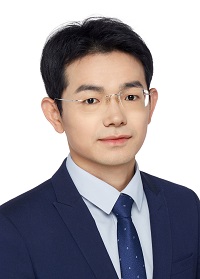
姓名:戴启立
职务职称:副教授,博士生导师
Environmental Data Science期刊编辑
中国环境科学学会大气环境分会委员会委员
中国环境科学学会生态环境人工智能专业委员会委员
天津市青年科技工作者协会地球科学专业委员会秘书长
邮箱:daiql@nankai.edu.cn
研究领域:大气污染防治;大气环境计量学;环境大数据分析;环境机器学习
研究兴趣:围绕空气污染精准溯源与控制问题,运用数理统计、数据科学的理论与方法,揭示“人类活动—空气污染—天气气候”系统的复杂关联,研发数据驱动的污染控制决策支撑技术。诚邀感兴趣的同学、同行联系合作!
教育背景
2013.9—2019.6 南开大学 ac米兰中国官方网站 理学博士(硕博连读)
2016.8—2017.8 美国莱斯大学(Rice University) 市政与环境工程系联合培养博士生
2009.9—2013.6 安徽师范大学 ac米兰中国官方网站 工学学士
科研经历
2023.10 —至今 南开大学 ac米兰中国官方网站,副教授
2019.7—2023.9 南开大学 ac米兰中国官方网站,师资博士后、助理研究员
学术与社会任职
1. Environmental Data Science期刊(Cambridge University Press)Editor(2026—)
2. 中国环境科学学会大气环境分会委员会委员
3. 天津市青年科技工作者协会地球科学专业委员会秘书长(2026—2031)
4. 中国环境科学学会生态环境人工智能专业委员会委员(2025—2030)
5. Intelligent Climate and Eco-Environment期刊编委(2025—)
6. Journal of Hazardous Materials期刊青年编委(2024—)
7. Science of The Total Environment期刊青年编委(2024—)
8. 天津市第一批生态环境青年科技人才,天津市生态环境局(2024)
9. 2025、2026年欧洲地球科学联盟大会(EGU)分会召集人、主持
10. 亚洲大洋洲地球科学学会(AOGS)第21、23届年会分会召集人
荣誉与奖励
2025年入选2025全球前2%顶尖科学家“年度影响力”榜单
2025年中国气象服务协会气象科技创新奖二等奖(第二完成人)
2024年指导研究生获“ 2024年全国仿真创新应用大赛”研究生组一等奖、全国优秀指导教师
2024年入选天津市第一批青年科技人才
2024年《中国科学》杂志社2023年度“优秀封面奖”
2023年中国气象局2023年度气象科技成果评价良好等级
2023年天津市第十七届青年教师教学大赛校内选拔赛工科组一等奖(南开大学)
2022年美国地球物理学会Journal of Geophysical Research: Atmospheres期刊“Wiley Top Downloaded Article”
2022年美国化学会Enviromental Science & Technology Letters期刊年度“Best Paper Award”
2021年美国地球物理学会Geophysical Research Letters期刊“Wiley Top Downloaded Article”
主持科研项目
1.京津冀环境综合治理国家科技重大专项项目,京津冀污染过程智能调控决策模型与平台研发,2026—2029,课题负责人
2.国家自然科学基金面上项目,机器学习驱动的PM2.5源排放控制成效评估新方法研究,2026—2029,主持;
3.天津市自然科学基金面上项目,城市PM2.5空间精细化大数据模拟与溯源研究,2024—2027,主持;
4.天津市第一批青年科技人才培养项目,2024—2026,主持;
5.国家自然科学基金青年项目,大气颗粒物氧化潜势在排放源和环境受体中的粒径分布及来源解析方法研究,2021—2023,主持;
6.中国博士后科学基金特别资助项目,基于机器学习算法量化排放和气象因素对PM2.5环境浓度贡献的方法研究,2022—2023,主持;
7.中国博士后科学基金面上项目,基于先验信息约束的大气颗粒物来源解析方法研究,2019—2021,主持;
依托上述技术研发类项目,构建了数据驱动的空气污染成因来源解析与管控成效评估系列新方法(详见学术论著相关论文,欢迎使用!),相关研究成果被国家环境监测部门与十多个地市环境管理机构采用,多次服务于国家重大活动空气质量保障及区域重污染天气应急管控。
学术论著
发表学术论文100余篇,包括4篇入选ESI 1%高被引论文,累计引用6500余次,谷歌H指数43;以第一/通讯作者在《中国科学:地球科学》、Environmental Science & Technology (Letters)、Geophysical Research Letters、Journal of Geophysical Research: Atmospheres、Atmospheric Chemistry and Physics等期刊发表SCI论文30余篇。授权国家发明专利5项。部分研究/观点论文如下(†为同等贡献,*为通讯作者):
1) Dai, Q.*, Bi, X., Zhang, Y., Feng, Y.* (2026). “A Double Machine Learning Approach for Policy Evaluation Using Meteorologically Fixed Air Pollutant Time Series as an Emission Proxy.” ACSES&T Air, 3, 1343−1351.
2) Wu, B., Xie, M., Dai, Q.*, Bi, X., Zhang, Y., Feng, Y. (2026). “Improving Imputation of Missing PM2.5 Speciation Data Using PMF-Informed Source–Receptor Relationships.” Atmospheric Measurement Techniques, 19, 4219–4231.
3) Li, Y., Dai, Q.*, Zhu, W., Liu, X., Shen, J., Yan, R., Li, Y., Ding, J., Lee, Y., Zhang, Y., Feng, Y.* (2026). “Impact of the Chinese Spring Festival on PM2.5 air quality in the Beijing-Tianjin-Hebei and surrounding region: a machine learning-based counterfactual modeling approach.” Atmospheric Chemistry and Physics, 26, 5553–5566.
4) Liang, C., Li, Y., Liu, X., Yan, R., Zhu, W., Li, Y., Shen, J.*, Bi, X., Zhang, Y., Dai, Q.*, Feng, Y. (2026). “Evaluating Hangzhou’s urgent source-specific regulatory policies for the 2024 New Year haze: A receptor model and machine learning approach.” Journal of Environmental Sciences,165, 460–467.
5) Chen J., Dai, Q.*, Zhang, X., Tian, Y., Feng, Y., Hopke, P.K. (2025). “PMF Source Contribution Uncertainty Estimation via Effective Variance Least Squares.” ACSES&T Air, 2, 12, 3045–3053.
6) Liang, C., Li, Y., Liu, X., Dai, Q.*, Feng, Y.* (2025). “AI-Assisted Bayesian Structural Time Series Modeling for Assessing PM2.5 Air Quality Improvements During the Beijing 2022 Winter Olympics.” Atmospheric Environment, 121328.
7) Shao, M., Lv, S., Song, Y., Liu, R., Dai, Q.* (2024). “Disentangling the Effects of Meteorology and Emissions from Anthropogenic and Biogenic sources on the Increased Surface Ozone in Eastern China.” Atmospheric Research, 311, 107699.
8) Song, Y.†, Wu, H.†, Dai, Q.*, Liu, X., Zhang, Y., Feng, Y. (2024). “Differentiating periodic drivers of air quality changes: A two-step decomposition approach integrating machine learning and wavelet analysis.” Journal of Geophysical Research: Atmospheres, 129(7), e2023JD039658.
9) Dai, T., Dai, Q.*, Yin, J., Chen, J., Liu, B., Bi, X., Wu, J., Zhang, Y., Feng, Y. (2024). “Spatial source apportionment of airborne coarse particulate matter using PMF-Bayesian receptor model.” Science of the Total Environment, 917.
10) Shao, M., Liu, X., Lv, S., Dai, Q.*, Mu, Q. (2024). “The importance of local thermal circulations in PM2.5 formation in a river valley: A case study from the lower Yangtze River, China.” Journal of Geophysical Research: Atmospheres, 129, e2023JD039717.
11) Luo, Z., Feng, C., Yang, J., Dai, Q.*, Dai, T., Zhang, Y., Liang, D., Feng, Y. (2024). “Assessing emission-driven changes in health risk of source-specific PM2.5-bound heavy metals by adjusting meteorological covariates.” Science of the Total Environment, 927: 172038.
12) Dai, T., Dai, Q.*, Bi, X., Wu, J., Liu, B., Zhang, Y., Feng, Y. (2023). “Measuring the emission changes and meteorological dependence of source-specific BC aerosol using factor analysis coupled with machine learning.” Journal of Geophysical Research: Atmospheres, 128(5), e2023JD038696.
13) Ding, J., Dai, Q.*, Fan, W., Lu, M., Zhang, Y., Han, S.*, Feng, Y. (2023). “Impacts of meteorology and precursor emission change on O3 variation in Tianjin, China from 2015 to 2021.” Journal of Environmental Sciences, 126, 506–516.
14) Song, C., Liu, B., Cheng, K., Cole, M., Dai, Q.*, Elliott, R., Shi, Z.* (2023). “Attribution of Air Quality Benefits to Clean Winter Heating Polices in China: Combining Machine Learning with Causal Inference.” Environmental Science & Technology, 57, 17707−17717.
15) Dai, Q., Chen, J., Wang, X., Dai, T., Tian, Y., Bi, X., Shi, G., Wu, J., Liu, B., Zhang, Y., Yan, B., Kinney, P. L., Feng, Y.*, Hopke, P. K. (2023). “Trends of source apportioned PM2.5 in Tianjin over 2013–2019: Impacts of Clean Air Actions.” Environmental Pollution, 325: 121344.
16) Dai, Q., Dai, T., Hou, L., Li, L., Bi, X., Zhang, Y.*, Feng, Y.* (2023). “Quantifying the impacts of meteorology and emissions on the interannual variation of air pollutants in major Chinese cities in 2015-2021.” Science China Earth Sciences, 66(8), 1725–1737.
17) Han, B.*, Yao, T., Li, G., Song, Y., Zhang, Y., Dai, Q.*, Yu, J. (2022). “Marginal reduction in surface NO2 attributable to airport shutdown: A machine learning regression-based approach.” Environmental Research, 214: 114117.
18) Hou, L., Dai, Q.*, Song, C., Liu, B., Guo, F., Dai, T., Li, L., Liu, B., Bi, X., Zhang, Y., Feng, Y. (2022). “Revealing drivers of haze pollution by explainable machine learning.” Environmental Science & Technology Letters, 9(2), 112–119.
19) Shao, M., Xu, X., Lu, Y., Dai, Q.* (2022). “Spatio-temporally differentiated impacts of temperature inversion on surface PM2.5 in eastern China.” Science of The Total Environment, 855: 158785.
20) Shao, M., Yang, J., Wang, J., Chen, P., Liu, B., Dai, Q.* (2022). “Co-occurrence of surface O3, PM2.5 pollution, and tropical cyclones in China.” Journal of Geophysical Research: Atmospheres, 127(14), e2021JD036310.
21) Song, L., Dai, Q.*, Feng, Y., Hopke, P. K. (2021). “Estimating uncertainties of source contributions to PM2.5 using moving window evolving dispersion normalized PMF.” Environmental Pollution, 286: 117576.
22) Shao, M., Dai, Q.*, Yu, Z., Zhang, Y., Xie, M., Feng, Y. (2021). “Responses in PM2.5 and its chemical components to typical unfavorable meteorological events in the suburban area of Tianjin, China.” Science of the Total Environment, 788: 147814.
23) Dai, Q., Ding, J., Hou, L., Li, L., Cai, Z., Liu, B., Song, C., Bi, X., Wu, J., Zhang, Y., Feng, Y.*, Hopke, P. K. (2021). “Haze episodes before and during the COVID-19 shutdown in Tianjin, China: Contribution of fireworks and residential burning.” Environmental Pollution, 286: 117252.
24) Dai, Q., Hou, L., Liu, B., Zhang, Y., Song, C., Shi, Z., Hopke, P. K., Feng, Y.* (2021). “Spring Festival and COVID-19 Lockdown: Disentangling PM Sources in Major Chinese Cities.” Geophysical Research Letters, 48(11), e2021GL093403.
25) Dai, Q.*, Ding, J., Song, C., Liu, B., Bi, X., Wu, J., Zhang, Y., Feng, Y.*, Hopke, P. K. (2021). “Changes in source contributions to particle number concentrations after the COVID-19 outbreak: Insights from a dispersion normalized PMF.” Science of the Total Environment, 759: 143548.
26) Dai, Q., Liu, B., Bi, X., Wu, J., Liang, D., Zhang, Y., Feng, Y.*, Hopke, P. K.* (2020). “Dispersion normalized PMF provides insights into the significant changes in source contributions to PM2.5 after the COVID-19 outbreak.” Environmental Science & Technology, 54(16), 9917–9927.
27) Dai, Q., Hopke, P. K.*, Bi, X., Feng, Y.* (2020). “Improving apportionment of PM2.5 using multisite PMF by constraining G-values with a priori information.” Science of the Total Environment, 736: 139657.
28) Dai, Q., Bi, X.*, Huangfu, Y., Yang, J., Li, T., Khan, J., Song, C., Xu, J., Wu, J., Zhang, Y., Feng, Y. (2019). A size-resolved chemical mass balance (SR-CMB) approach for source apportionment of ambient particulate matter by single element analysis. Atmospheric Environment, 197, 45–52.
29) Dai, Q., Bi, X.*, Song, W., Li, T., Liu, B., Ding, J., Xu, J., Song, C., Yang, N., Schulze, B., Zhang, Y., Feng, Y., Hopke, P.K. (2019). Residential coal combustion as a source of primary sulfate in Xi’an, China. Atmospheric Environment, 196, 66–76.
30) Dai, Q., Schulze, B. C., Bi, X., Bui, A. A., Guo, F., Wallace, H. W., Sanchez, N. P., Flynn, J. H., Lefer, B. L., Feng, Y.*, Griffin, R. J. (2019). “Seasonal differences in formation processes of oxidized organic aerosol near Houston, TX.” Atmospheric Chemistry and Physics, 19(14), 9641–9661.
31) Dai, Q., Bi, X.*, Liu, B., Li, L., Ding, J., Song, W., Bi, S., Schulze, B., Song, C., Wu, J., Zhang, Y., Feng, Y., Hopke, P.K. (2018). Chemical nature of PM2.5 and PM10 in Xi’an, China: Insights into primary emissions and secondary particle formation. Environmental Pollution, 240, 155–166.

